Friday, November 11, 2016

no more Bookroom news

The observant among you will have noticed the change of title for this blog. This used to be WEC Publications & Bookroom News, although to be fair the Bulstrode Bookroom scarcely got a mention. But the Bulstrode Bookroom closed at the end of June, and I write this on the eve of WEC selling Bulstrode. As I mentioned in the last blog,we have disposed of a lot of slow moving and non-core stock, and we are now selling a slimmer range of titles.

I notice that Kitab, who operate a parallel business to ours for Interserve, are about to do the same, concentrating on those publications that are core to who they are and what they want to do. I take this opportunity to salute their excellent service to the Christian community in raising issues and providing resources for those who want to share the good news of Jesus, particularly with those with a Muslim background. 

Tomorrow there will be an Operation World Conference at Bridge Community in Leeds. There will be an opportunity there to buy the new book Serving God in a Migrant Crisis. Patrick Johnstone might even sign your copy! But also available will be Pray for the World, with its daily guide to help you pray for every country in the world, and many issues that affect the peoples of its various and diverse regions.

Friday, November 4, 2016

Almost there

If we were in a halfway house in April, we are nearer our destination now. We have now made most of the transition from operating out of WEC's Bulstrode HQ to a different arrangement.

In June we had a celebration at Bulstrode for the 49 years WEC had been there. But that was also a farewell, because Bulstrode is being sold. The celebration was also an opportunity to sell Paul Harvey's book about Bulstrode, To Everything a Season. For those who have loved Bulstrode, and indeed for local residents, it was a great souvenir. It is still available from Paul Harvey.

That was also an opportunity for the eagle-eyed to pick up old or damaged stock, leaving us with core stock that we have now moved to CLC. Their new warehouse near Chester now also houses our books. Many of the titles we have been selling CLC also sell, and where they have stocked a title, they are buying our stock, so that they don't have two sets of books in their warehouse belonging to different parties. But those titles that they don't stock remain ours. What does that mean for you if you want to buy a WEC book?

Please continue to order from bookorders [AT] wecinternational.org.uk. We will pass the order on to CLC to fulfil. We need to clarify the procedures, but we will continue to invoice you for our books, and CLC will invoice you for theirs. We trust that this will work well, and we are very grateful to CLC for their willing service to WEC Publications. If you notice any glitches, please let us know.

Tuesday, April 12, 2016

Halfway house

I've moved. I'm back in Rossendale, east Lancashire, in the north of England, a very different environment from Wiltshire with its large skies, ancient monuments and southern culture. Different too from Bulstrode, where our stock and sales are still being handled by Gillian Armstrong. I am very grateful for many people who helped us with packing, loading, driving and unloading. We are gradually finding our feet and settling back in to a house we left nearly four years ago.

This leads me to two observations. The first is that there are millions of people on the move in our days who don't have the luxury of choice, nor the comfort of helpful friends, but who have to rely on untrustworthy people to help them on their way, without the assurance of success but with a desperation that drives them on. This is the subject of a new book in the series that has been born out of Patrick Johnstone's work for his book The Future of the Global Church (which we are now offering at £10). Dean Merrill has taken some of that material, expanded it, and put it into a new book, Serving God in a Migrant Crisis. I think this is going to be a seminal book for many who are seeking to know how to respond to a very changed and unstable world. Click on the link for ordering details. It is published in the USA by GMI, and the print version is $14.99 plus shipping. The e-book is $9.99.

 My other observation is that we are still working on finding the best solution for making WEC books available to you in the future. We have to move our stock out of Bulstrode by the end of this year, and there are still options to be explored. But although we have recently destocked further to retain only a good core of WEC books, we are committed to keeping these core books available to buyers throughout the world.

Tuesday, March 8, 2016

Moving home and moving stock

The story so far . . . .

WEC Publications lived for many years at Bulstrode, the WEC UK headquarters west of London. Then everything moved up to Rossendale in east Lancashire. There it settled for a few years, but then moved back to Bulstrode in 2012. Now Bulstrode is to be sold, and the question of what happens to WEC Publications necessitates another move. So, what next?

Well, there is more than one way to skin a cat, so I'm told, though I am not looking for any evidence of that. So I have been looking at various alternatives.

One factor that does carry weight is that WEC is moving from a centre that has hosted many visitors and conferences over the years. The new HQ won't be like that; it will be an office block in Coventry. So the opportunity to browse books and sell to visitors will be severely reduced.

Our sales in the UK have reduced a lot in recent years. This has been offset to some extent by continuing sales to WEC Branches in other parts of the world, particularly Australia, Canada, New Zealand, Singapore, and (surprisingly) Switzerland.

My last post spoke about the fact that books have a life-span and reach a point where sales peter out. We are trying to deal with that, and humanely put down some older titles. That leaves us with less stock for which we have to find a new home.

We want to continue to make available core WEC titles, newer books and titles we can print on demand. We are therefore in touch with friends who can do that better than we can, and hope that later this year we will move our remaining stock to a new home, from which WEC books will go out to faithful readers as they have for many years.

Friday, February 26, 2016

The natural history of the book

Do books last for ever? Well, some do. There are classics that appear in a variety of editions, repackaged for each new generation. Even such a doorstop as War and Peace, which one is tempted to think no one really ever reads, is now selling well, I believe, as a result of the recent BBC TV adaptation. (My brother has recently read the whole thing; kudos to him!) And few books are lost forever. At least there will be copies in the British Library or other legal deposit libraries around the world.

But the reality is that most books that are published - that survive the cruel process of selection, editing and packaging by a publisher - have their moment of glory (if they are lucky) in the sun, and then fade away. The common trajectory has come to be known as the Long Tail. This means that after a big rise in sales at the beginning of its life, the market is satisfied, and demand then drops away. Actually, with proper marketing a book may be launched to immediately wonderful sales figures.
The point of the Long Tail in recent years is that the Internet has made sales of previously uneconomic goods (especially books) possible, because a worldwide market can still access something for which demand has dropped away to virtually nothing. Amazon has capitalised on this, and with its resellers has cornered a market in old and rare but not necessarily valuable books. Someone somewhere has copies for sale, and you can have one for a reasonable price plus the cost of postage and packing, which itself has become very efficient.

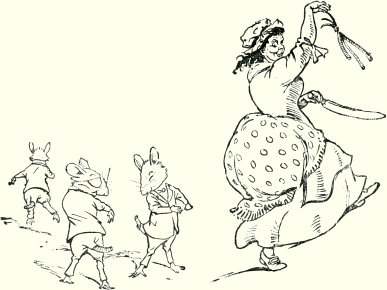
WEC Publications has managed to keep lots of books alive for a long time, partly because of free storage costs. But now that era is coming to an end, and a cull has begun. Some of our titles have had a very Long Tail, but at last the farmer's wife has caught up with the blind mice. As a result of this, you will find some titles disappearing from worldmissionbooks.com. You may find free copies of old WEC books turning up unexpectedly. But we cannot continue to sell some titles for which we have not had any demand for a long time.


Some titles (and I had better not name them) will be little mourned by me. But others I will see go with quite some sense of regret. The Briefings series produced 11 great booklets about the frontiers of world mission. Some are of continuing relevance, but having been produced between 1998 and 2006 quite a few are now relatively old, and the market seems to be satisfied. We will make them available for the last time at the celebration to mark the move of WEC from its Bulstrode headquarters on 4 June. Unafraid of the Sacred Forest is an invaluable description of what African traditional religion is, and what freedom from it in Christ is about. The Spirit of Revival is the story of the Congo Revival of the early 1950s. These titles were published by Christian Focus Publications, and will still be available from their web shop, catering to the Long Tail. C T Studd: Cricketer and Pioneer is a classic, if ever there was one. First published by Lutterworth Press in 1934, it was out of print for a while, and we were allowed to import copies of an American edition, but it is now available from Lutterworth Press once more.
Some titles we have been produced by Print On Demand in small quantities, and will continue to be available. These include He Gives Us Authority, Whatever Happened to C T Studd's Mission, and Thousands.

So if you do want a WEC title, act now before all stock is lost.

Monday, December 14, 2015

Let's hear it for holiness!


I recently read God’s Strategy in Human History by Roger Forster and Paul Marston. It is a new edition of a book originally in 1973. It is now in two volumes, the first (God’s Path to Victory) making the essential arguments, with a particular view of Scripture, and the second (Reconsidering Key Biblical Ideas) looking particularly at those concepts which divide Calvinists from Arminians. The authors come from an Arminian / Wesleyan / Anabaptist tradition, and (particularly at the end of volume 2) they attack doctrines that they see as having been innovations that were introduced to the church by Augustine around AD 400. 

The new two-volume edition is an enormous improvement on the earlier editions. With the promiscuous use of bold words and phrases and masses of footnotes, some of which were simply references, but others were important expansions and explanations from the main text, I found it almost unreadable. The new edition has almost done away with all footnotes. 

But it has also benefited from more recent scholarship, in particular the New Perspective on Paul, with N T Wright being its foremost proponent. One aspect of this is to redefine justification. Yes, that’s right. Augustine thought and wrote in Latin, and didn’t much like Greek, and he knew nothing of Hebrew. This led him into misunderstanding key things in the New Testament. Wright maintains that justification is not being made right with God, but being declared to be in right standing with God, on the basis of what Jesus has done for us. And there are places where the phrase ‘the faith of Jesus Christ’ has been translated (even in recent translations) as ‘faith in Jesus Christ’. Forster and Marston show that what Paul was talking about was the faithfulness of Jesus before the Father, going to the cross for mankind. Some scholars have apparently argued that there is a special Greek construction that means something in these NT references that is not found elsewhere in Greek, but that special treatment seems both unnecessary and obscures the wonderful truth. 

I think there is still room for editorial improvements, but this is undoubtedly an important book. But why am I writing about it here? (And if you have read this far, well done!) The answer is because I have found the Arminian position hugely liberating. That is not because I am antinomian, rejecting the idea that God has set standards and laws for us to follow, or that I think man can make himself acceptable to God by his own efforts. But it took me too long to discover that God really loved me. He doesn’t just tolerate me because He has to, because the work of Jesus on the cross binds Him to do so. And as long as I maintain the position that I am a miserable sinner saved by grace then I will feel my position precarious before God. But that is simply not the case. 

It was the writing of Norman Grubb that first helped me in this. His book Who Am I? set out the basic framework that showed me that at a very deep level I belong to God, and His Spirit lives in me and controls me. Being a part of Ichthus Christian Fellowship in south London for some years, and after coming in to WEC I have deepened my understanding. WEC gave me an understanding of holiness that the Church of the Nazarene helped me to hone. Now, being an interdenominational mission, WEC’s understanding and definition of holiness allows a good scope for various interpretations, but it became a core value of WEC out of Norman Grubb’s links with the Holiness movement. And it is not just about right behaviour. Much deeper is Peter’s statement that we share the divine nature. “His divine power has given us everything required for life and godliness through the knowledge of Him who called us by His own glory and goodness. By these He has given us very great and precious promises, so that through them you may share in the divine nature, escaping the corruption that is in the world because of evil desires.” (2 Peter 1:3-4) That is the basis for living, as Norman Grubb would have said, spontaneously. We still pray, “Forgive us our sins, as we forgive those who sin against us”, and we still need to take time to check our actions, but we can live in great freedom as those who know that God has given us a hope that is of a solid and permanent nature that cannot fade away.

“Praise the God and Father of our Lord Jesus Christ. According to His great mercy, He has given us a new birth into a living hope through the resurrection of Jesus Christ from the dead and into an inheritance that is imperishable, uncorrupted, and unfading, kept in heaven for you. You are being protected by God’s power through faith for a salvation that is ready to be revealed in the last time.” (1 Peter 1:3-5)

Thursday, November 19, 2015

What is prayer?

Norman Grubb was not only the person who built the modern form of WEC International. He was a great man of prayer, and some would say he was a mystic. He writes in his autobiography Once Caught No Escape how he once said to C T Studd, the founder of WEC, his leader and father-in-law that they should pray more. C T Studd agreed, but said that should not get in the way of the work. So the next morning C T was up an hour earlier than the very early hour they normally got up, and Norman Grubb heard C T's banjo playing, but turned over in bed and went back to sleep!

But here is an account of what happened when he heard the news of C T's death in Africa. It comes from After C T Studd, which we have just reissued as an e-book. Norman Grubb was the leader of the work, based in London.


. . . We were to take up the sword C. T. Studd had laid down. . . . one supremely great secret of effective service had become vividly real to us, which lies at the root of most that follows in these pages. It was the answer to that simple but fundamental problem, how can I know God's will? If I know it, then obviously I can believe and act. But first I must know.
How can I put the light we saw in a word? Perhaps best by describing what we did. We made one change in the daily programme at  headquarters, but that change made all the difference. It was customary to start the day's work with a half-hour of Scripture reading and prayer; then followed the real business, letters, interviews, and committees. Now the emphasis was to be changed. The reading and prayer was to be the real business of the day, and the rest fit in as best it might. In other words, our first occupation became, not to exercise our own minds, but to find His mind. What an overwhelming difference that made. Away went worries, plans, defeatist fears. In their place was just this. What does God say about it? What God says is always original, always in the impossible, and great enough to be worthy of Him.
What He said was this. Our petty human thinking was occupied with the littleness, poverty, weakness of our condition. He said, 'Look at Joshua and see what I did for him, and Moses and Abraham and Daniel. Do you think I have given you a great commission – to evangelize the world – and not great resources to do it with? Does not all the Bible tell you that I have come to make people strong out of their weakness, if they will only believe? Now, will you believe?'
The answer was obvious. Just one thing remained. For what specifically should we ask and believe? What was our immediate equivalent of Moses's need of manna, or Joshua's need of a way across Jordan? That was not hard to find. Men and money, of course. For we were a Crusade to evangelize unoccupied areas, and that needs just those two supplies.
So we came to our first transaction of faith, based on guidance, a truly memorable moment in our history, for what we did then we were to repeat in an endless succession of instances for an endless variety of needs. We came somehow to the conclusion, I can't tell exactly how, that for us the impossible which would glorify God and extend His Gospel would be the supply of ten new workers and all the money for them in a year, by the first anniversary of C. T. Studd's death, July 16, 1932.
Having done that, we exactly obeyed the word of Christ, 'When ye pray, believe that ye receive.' We deliberately thanked the Lord for what we had then received. From that day on we never asked again for the ten, but daily reminded Him and ourselves in His presence that they were ours, and thanked Him. Our daily prayer meetings were turned into enjoyment meetings, possessing and enjoying our possessions in the invisible, before we had them in the visible. One other lesson also that was gradually learned, of deep importance in faith, was that the Source is our concern, not the channel: in other words, that we are to keep occupied with what we have already received from Him in the unseen, and not be diverted into looking around for the way in which He may send it in the seen.